Posted on

BEGINNER BOARDS

Over the last few years with advancements in technology lots of different surfboards designed specifically for the beginning surfer have emerged. Probably the most well known of these have been the epoxy models developed by Surftech. In the four years since NSP was created, they’ve become the largest Surfboard manufacturer in the world!

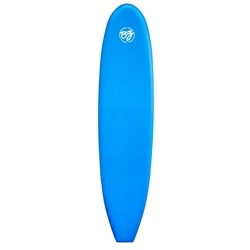
Bz 8' Blue

Surfers never forget their first surfboard. Beginner surfboards are the key to surfing life, so it’s important to make a wise choice when you’re riding the inaugural waves.

Surfboards for beginners have special features. If you’re learning to surf or if you’re introducing a friend/relative to the sport of riding waves, weight and height are the first variables to have in mind.

Floatation demands volume. A good beginner surfboard has high buoyancy so that errors and mistakes made by surfers while catching the balance are easily “forgiven” or tolerated. Stringer technology has been added, too.

Surf novices should buy soft top surfboards that will help them catch as many waves as possible in the early white water stage. Surfing beginners will paddle faster and will rapidly pop up on these stable boards, despite being bigger and heavier than traditional shortboards.

Quality foam surfboards can last forever. They range from 6′ to 8′ sizes. An average adult should get into surfing with an 8′, while a child can learn with a 6′ or 7′. The bigger the board, the faster you’ll be enjoying the pleasures of wave riding.

Surfboards for beginners are quite affordable, and your first surfboard will always be useful, even after progressing to an intermediate surfing level. That’s what a surf quiver is made of. An alternative to foam surfboards are pop-out surfboards, made of molded plastic or very thick resin.

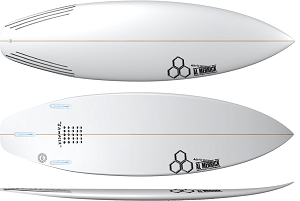
NSP E2 Funboard

After the beginner has become more proficient on the soft board catching waves, standing & turning, the Surfer often wants to advance to a more advanced hard surfboard. A good second choice is often the molded epoxy surfboards from companies like Torq and Surftech. A vacuum molded Epoxy Foam and Fibreglass sandwich wrapped in a ballistic skin ensures that this board can stand up to almost anything.  With modern rails and rocker these boards will help the student advance more quickly and help get them ready for a high performance surfboard.

Posted on

TYPES OF BOARDS

Performance Shortboards

Performance shortboards today are generally boards found in lengths between 5’6″ and 6’6″. The average width falls between 17 1/2″ and 19 1/2″ and thickness of 2″ and 2 3/4″. Nose widths vary from about 10″ and tail widths usually fall between 13″ and 14 1/2″. These basic dimensions are increased or decreased depending upon the height and weight of the rider.

Recent trends in shortboards feature a slightly flatter rocker, with various subtle concave configurations on the bottom. Virtually all are the basic 3 fin thruster design. The center widths have seemed to creep a bit wider along with slighter wider tails.

Tail configurations vary wildly in shortboard design…squash tails, round tails, along with swallows and occasional wing designs are all widely being ridden.

For the novice surfer, shortboards can be very frustrating…they are difficult to catch waves on and can be very hard to ride in small weak surf. We always suggest beginners to start with a Funboard shape, learn the basics, and advance to a shortboard later.

water_hog_feature

Funboards/Eggs

Fuboards are aptly named because they allow the Surfer to focus on the purest goal of surfing…To have fun! Funboards incorporate all of the elements of modern design including moderate rocker, performance rails and standard tail designs. Funboards normally utilize the standard three fin setup although you can also find them as 4 Fin Quads and 2+1 setups (smaller side fins with a large center fin). Because of their larger volume and length, it allows the riders to paddle, catch waves, and turn effortlessly. Most shapers will agree that for average recreational Surfers, funboards provide the best of both worlds: the paddling power of a longboard and the turning ability of a shortboard all blended into one.

Funboards work very well in small to medium Surf, however, funboards lose their charm in large Surf. The shape is a great all around board that works well for all Surfers, best is best suited to the beginner or a Surfer making a step down in length from a longboard toward a shortboard.

ci-average-joe

Modern Fishes

The Modern Fish design is a re-invention of a design that came into prominence in the late 70’s. The original Fish was designed by Steve Lis of San Diego. The design features a full nose, full parallel rails ending in a wide swallow tail. The fins were set near the rails. The design was ridden very short generally between 4’10” and 5’6″. and featured a very loose skaty feel, which worked well in small sloppy surf. Today’s Fish is generally ridden in lengths of 5’8″-6’6″. The widths range from 19 1/2″-21″. The noses fall between 11″-13″ and the tails range from 14″-15″. Some designs have wings and most bottoms have generally flatter rocker for increased speed. Today’s fishes are ridden as twins, thrusters and now even Quad 4 fins, although many of the 3 fin configurations use bigger side fins and a smaller trailer fin. Because of the added width, Fishes tend to ride flat on the wave and don’t transition from rail to rail very well making them difficult to surf vertically. However, the flat rocker and quick planing make this very fast design that loves to race down the line and blast past slow sections on a wave. The Fish is best for intermediate to advanced Surfers.

ci-semi-pro

Guns

Guns are serious surfboards for serious surfers. They are designed for riding on the largest days of the year. Chances are if you need this type of board you’re probably not reading this except for the sake of education. Guns are often thought of as a survival tool rather than a performance design, because only the best of designs would be used to survive the giant waves ridden on the beasts.

The objective in Big Wave Surfing is to get into the wave early, get down the face and make the wave. These boards have vee bottoms which create suction and control, essentially holding you on to the face of the wave. The last thing a Surfer wants in giant Surf is to spin out at the bottom of a twenty or thirty foot wave!

Guns need to be thick with the wide point slightly forward of center for maximum paddling efficiency and to help cover a lot of ground in a very short time. Guns are normally thrusters or single fins. This type of board is for expert Surfers only.

walden-magic

Performance Longboards

Since the Longboard resurgence in the late 80’s, the Modern Longboard has truly gone through a revolution in design. While many longboarders prefer the wider, flatter, heavier ride that Traditional Longboards deliver, there’s another group of Surfers that want to push the limits and use all the benefits that a longboard delivers while still doing Shortboard maneuvers. These demands have produced a newer longboard design…the High Performance Longboard.

High performance Longboards are narrower than their traditional brothers, with widths of 21 1/4″-22″. They have increased rocker to allow for faster maneuvers. many Performance Longboards feature greatly increased rocker right in the last 1′-2′ of the tail. They are also thinner with thickness ranging from 2 1/2″-2 7/8″. Almost all feature either a three fin thruster design or a 2+1 fin setup. Many also feature high performance rails and various concave bottom configurations. The magic Model is without a doubt one of the most high performance Longboards ever produced!

Murphy competitor. While the high performance design is much more maneuverable than the standard longboard…there are also drawbacks. While they are usually much lighter than the standard, this is because they are generally glassed much lighter, usually without the final gloss coat. This make them more fragile than the Standard design. Because of their increased rocker, they do not glide as well as the stock designs, but under the feet of an advanced longboarder they are able to reach mach speeds all the while blasting from turn to turn!

modern-retro

Traditional Longboards

Longboards are loved and hated by all. If you’re riding a longboard, you love riding them. If you’re on a shortboard chances are you’ll hate all the longboarders in the line-up. The truth is, riding a longboard puts you as close to the roots of surfing as possible.

On a board that catches any wave with ease, you’ll increase your wave count riding one. You’ll learn or re-learn the simple joy of wave riding. Because of it’s length, width, and thickness, longboards are often referred to as Tankers. The Longboards straight rail line makes it trim effortlessly down the line but requires strength and good technique to perform. Noserider Longboards are often thicker and bulkier with concave in the nose. Most Traditional Longboard bottoms utilize vee, blending from the center and flowing off the tail. Longboards work in any size waves and for Surfers of any skill level from first timers to life long Surfers.
Posted on

SURFBOARD CONSTRUCTION

Surfboard construction has come a long way since the days of wooden boards. Foam blanks were introduced in the 1950’s and revolutionized Surfboard construction. In the last few years, space age technologies have begun to re-revolution surfboard construction. Below is a breakdown of some of the most popular types of construction in use today.

Polyester is the traditional type of Surfboard construction in use since the 1950’s. A shaped polyurethane blank is glassed by hand using fiberglass cloth and polyester resin. several layers of resin are applied to the board before it is sanded and given it’s final finish. These boards simply feel good, look clean and ride unreal.

technology_poly_img

Epoxy Surfboards are made with either an EPS (Expanded Styrene) or an XPS (Extruded Polystyrene) blank. The EPS blank is a beaded foam which is much like those found in beer coolers. It is an open cell foam that absorbs water like a sponge if exposed to water. The Extruded blank has a closed cell core and is much more resistant to compression and damage. Fiberglass cloth and epoxy resin are used to hand glass the blank. The glassed blank is then finished in the traditional method. Using epoxy resins create a more lightweight durable board.

technology_slx_img

SLXC Epoxy pioneered by Global Surf, the SLXC features a stringerless carbon railed blank which is glassed using vacuum bag technology. The combination of stringer removal, carbon biaxial rails and biaxial deck fibers helps keep the surfboard from twisting in a turn keeping the flex from nose to tail. This makes the board feel very responsive and alive under your feet.

technology_slx_img


Future Flex, another technology pioneered by Global, the blank is a high density EPS. The key to the flex pattern is the parabolic carbon fiber frame constructed with the laminate. The carbon fiber frame is designed to maximize speed and drink while maintain a flex pattern that flows in the wave.

technology_futureflex_img

Technology Carbon Vector Lrg Carbon Vector
Carbon Vector (CV) construction delivers unmatched performance by harnessing the flex characteristics of epoxy and the strength of carbon. CV combines a stringerless, high-density custom shaped EPS core laminated with biaxial fiberglass, epoxy resin and a distinctive carbon fiber webbing, (positioned on the bottom and around the rails).
The carbon fiber webbing serves to evenly distribute tension across the entire surface area of the board to produce a lively, yet controlled flex pattern with remarkable memory recall. The biaxial fiberglass on the deck serves to add strength and also help prevent delaminating. CV boards feel fast, light and highly responsive in all conditions.
Created by GSI to compliment a range of board models and designs, this construction has proven to have superior flex properties over our other board technologies by up to 20%.


CARBON WRAP TECHNOLOGY

CARBON WRAP™ Is a patented surfboard technology, structurally engineered for optimum flex and performance. Originally created by Gold Coast surfboard manufacturer, Dan MacDonald, to be light weight without sacrificing strength and provide #nextlevel performance. Carbon Wrap eliminates the standard wooden stringer, alters traditional flex principles and re-envisions the way a surfboard’s flex patterns are created and controlled. Ultra-light, EPS cores are “wrapped” in an exoskeleton of strategically positioned, carbon fiber bands. Aligned together at the nose, they gradually curve outward towards the rails. The curve creates and controls a unique torsional flex that livens up as it nears the tail, just in front of the fins. The carbon then “wraps” from the bottom, around the rails and onto the deck. This unique method creates Carbon Wrap’s lively flex that loads and releases…resulting in nextlevel speed and drive. Running along the rails, on the deck, the carbon acts as a rear foot power point, (increasing drive and control) and a patch to minimize pressure denting. Using optically brightened epoxy resin, the boards are encased with a proprietary composite of fiberglass and our exclusive carbon deck inlay, which is strategically positioned to add fast re-flex memory under the surfer’s stance and allow subtle, natural deck caving around the arch of the front foot. By tapering the carbon into long, pointed ends, forward and aft, the flex blends out naturally towards the nose and tail.  A full layer of 45degree “X-Glass”, encases the deck. The X-Glass’s flat, bi-axel weave dramatically adds strength without rigidity, or excess weight and allows the board to maintain flex while alleviating crease points created by standard, 90degree fiberglass. The 45degree weave radiates foot pressure outward, directly connecting the foot to a longer section of the rail, adding greater edge control. CARBON WRAP TECHNOLOGY: Lightweight, without sacrificing strength.  Increases drive and provides and unique and lightning fast re-flex effect,  propelling your surfing into the #nextlevel of performance.

FLEXBAR TECHNOLOGY

Introducing patented Flexbar technology by Channel Islands and Barron Flex. Flex, rebound, and resonance all play a role in how your board works. Harnessing and controlling these will take board performance to the next level.  The Flexbar optimizes the energy and spring derived from both longitudinal and torsional tail flex in your surfboard by refining and focusing these forces under the back foot. Utilizing a combination of alternating foam densities and fiberglass through the entire board, Flexbar finally allows the surfer to feel and use the energy in your board through maneuvers.  All surfboards will eventually lose their “pop” and begin to feel dead, Flexbar maintains the optimum flex pattern through the life of your board.  All of this backed up by a one year warranty against breaking (read the warranty HERE), Flex-bar technology is the ultimate in performance

Spine-Tek

Channel Islands is proud to announce our collaboration with Shapers Australia to launch SPINE-TEK; a precision engineered stringer spine utilizing a unique composition of fiberglass and resin. SPINE-TEK is based on the principles of elastic energy, to flex under pressure and then return the surfboard back to its natural rocker, providing surfboards with a more lively and responsive feel.

Performance through innovation, SPINE-TEK® is a world’s first with its unique fiber-based composition, delivers optimal flex based performance through the principles of elastic & kinetic energy. Through this process the surfboard loads up on energy and then releases, generating additional drive, speed, power & flow.

Weighing a mere ¼ of a pound and installed in the surfboard deck, SPINE-TEK replaces the traditional heavier timber stringers and is virtually break free.

Posted on

LEARN TO SUP IN NEW JERSEY

Eastern Lines has been serving Ocean enthusiasts in New Jersey since 1981. Our Mantra has always been……. Soul – Tradition & Experience! We would love everyone to enjoy the exhilaration of spending time on the ocean and waterways. Anyone can learn to Surf, but the explosion of SUP’s has offered many more people the opportunity to experience the Ocean Lifestyle we love!

We offer Lessons to those new to the sport on the calm waters of Shark River. A lesson is important to learn the correct techniques of SUP, to make your paddling adventure the most fun and beneficial.

Our lessons begin on the beach where you become familiar with the board and the paddle. In just a short time we’ll have you out on the water paddling and enjoying the day! After just one lesson most students are comfortable enough to proceed on their own, but we do offer additional lessons for those that need more confidence or want to further improve their SUP techniques.

As your skill levels improve, we do offer introductory SUP Surfing lessons. Taking an SUP into the ocean is a completely different experience than flat water paddling. Only those that are proficient paddlers and are confident controlling their board should venture into the surf. If you are ready…… we can help give you the tools to ride that wave!


LESSONS

Beginner – 1 ½ hours @ Shark River (up to 2 people)

Paddleboard and paddle included in lesson – $150.00 each

If you have a larger group we can provide additional instructors and discounts!

Beginner Surf Lesson – 75 Minutes in Belmar in the ocean – $90.00

We offer lessons 7 days a week from May into October. All you need to do is call the shop @ 732-681-6405 and we’ll get you set up. Our lessons are tailored to your schedule……. Mornings, Afternoons, Evenings, Weekdays or Weekends……..

Posted on

LEARN TO SURF IN NEW JERSEY

Surfing is lots of Fun and one of the fastest-growing natural sports today. Nothing can match the feeling of paddling for an open Ocean swell, catching the wave, jumping to your feet, and riding a wave formed of pure ocean energy! In addition to Surfing, we also offer lessons in Bodyboarding and the new sport of Stand-up Paddle Surfing! Our experienced staff of Instructors will guide you through all the essential fundamentals needed to get you started on your Ocean Adventure……..

Beginners start with the basics of water safety, paddling and wave selection. We stress Safety! All of our Surfboard lessons are given on soft Surfboards. The site is determined by our instructors to optimize your safety, fun and learning experience. We teach at your pace and cater to the individuals or groups and their abilities.

Intermediate Surfers can benefit from advanced lessons from our instructors on bottom turns, top turns, cut-backs, barrel riding, reading swell directions, conditions and more!

We offer Lessons 7 days a week from late May through September. All you need to do is call the shop at 732-681-6405 and schedule an appointment!

We now offer Lessons in the new fast-growing sport of Stand-Up Paddle Surfing! We offer individual one on one lessons both in the river and ocean to introduce you to the basics needed……….

Our Lessons are tailored to your needs and schedules……. Mornings, Afternoons, Evenings, Weekday or Weekends!

Rates
Surfing Private Lesson : $90.00/ 75 Minutes

3 pack of Private Lessons $240.00

Surfing Group of 2 : $85.00/ each – 75 Minutes

Surfing Group of 3 : $75.00/each – 75 Minutes

Bodyboarding Private Lesson : $85.00/ 75 Minutes

Stand-Up Paddling (up to 2 people) : $150.00/ 90 min (includes board & paddle)

All lessons include use of Boards!

To schedule a Lesson call 732-681-6405

Posted on

SOUTH AFRICA

POINTS AND BAYS
by Roger Smith surf guide with www.dawnpatrol.co.za/

Points and bays. Beachbreaks and reefs. Lefts and rights. High tide and low tide. Onshore and offshore.

There’s a big swell on the horizon, and some of it is wrapping in to roll along the coast.
Where are the best waves on offer? It’s our job to find them, and to make sure that they are surfed.

The guys are ready and waiting in anticipation. They watch us expectantly while we debate and deliberate.

Okay, it’s decided then. We go west to a bay that will probably deliver the goods, and failing that we go to “the vale”.


Fifteen minutes later we are watching the lines pealing into the bay, fanned by a warm offshore. One wouldn’t think it was mid-winter. The sun is beating down out of a cloudless sky, and it’s only 8AM.

Nope, it’s not perfect. Maybe later when the tide pushes. We move on. The road is now a gravel one sweeping through bushveld and farmlands. Good road. Down into a valley, and onto a grassy patch.
The boys pile out. Cool sounds on the radio.

Look at that! A set lines up on the point and grinds over the rock and sand bottom. Five cooking waves follow. The water’s clear and the surf is good! A flurry of excitement as the guys get the boards out. I knew we’d get waves here and we’ll only have dolphins for company. Nobody surfs here! Baggies and a top will do as it’s about 20 degrees in the water.

Our American guests from colder climes are jumping around. This is the life, amigo.

The point is grinding but that doesn’t deter Glenn from backdooring the first wave….

Louis and Roger run Dawnpatrol, a surf tour operator based in East London on South Africa’s south east coast. They and their support team move up and down the coast, surfing the best waves on offer between Jeffrey’s Bay and the Natal South Coast. Check ou www.dawnpatrol.co.za/ for more info!

Posted on

DOMINICA

Dominica is a Caribbean Island located about half way between Puerto Rico and Trinidad.

Dominica defies the Caribbean cliché on many levels. No mass tourism, no white powdery beaches, no rum-fueled pool parties. Nicknamed ‘nature island’ for a reason, the island lures largely individualists and ecoadventurers with its Boiling Lake, Champagne Reef, rainforest-shrouded volcano, sulfurous hot springs, superb diving, surfing and the Caribbean’s first long-distance hiking trail.

Airports & Airlines

Douglas Charles Airport Most flights arrive at this small airport, previously known as Melville Hall Airport. It’s near Marigot on the northeast side of the island and about a 90-minute drive from Roseau. LIAT, Winair, Hummingbird Air, Air Sunshine, Air Antilles and Seabourne Airlines provide service within the region.

Canefield Airport This tiny airport is on the west coast near Massacre about 15 minutes north of Roseau. Winair flies to St-Martin/Sint Maarten from here but other flights are mostly private planes.

There are no flights to or from North America and Europe. You need to connect in Antigua, Barbados, St-Martin/Sint Maarten, Puerto Rico, Guadeloupe or Martinique.

Dominica is not very well know as a surf destination, but if you are looking for uncrowded surf in lush tropical conditions, Dominica is worth a look. There are several known surf spots in Dominca:

Calibishie, located on the NE coast. Rock, reef bottom, very consistent on North-Northeast swells

L’anse Tortue Located south of Calibishie, it also has a rock reef bottom.

Pauga Bay Located on the East coast, this is a fickle rivermouth, that on the right swell produces a great wave!

Turd Burgers, located on the East coast, this is a beachbreak better suited to beginner Surfers.

Scott’s Head, located on the South point of the island. This is a good left on a rock reef. Only breaks on south swells.

DIGITAL IMAGE

In addition to Surfing, Dominica offers beautiful waterfalls,hiking, and great diving. The people are incredibly friendly and go out of their way to help you. When we were there, we hired a driver for $20 a day. He drove us all over the island where we met wonderful people and had an awesome time.  Although we were only there for a few days, I think it would be a great spot to return to.

Posted on

G-Land Indonesia

A place of mystery, perfection and danger.
grajagan-aka-g-land-map.jpgHome to one of the worlds most incredible left handers. G-Land is located at southern tip of Java where deap Indian Ocean swells organize on a razor sharp reef. There are three main section to the wave, Kong’s, Moneytrees and Speedies. Each with their own challenges.
Kongs is at the tip of the reef and normally the biggest section. It can roll in a little easier than Moneytrees but it’s hard sometimes to determine where the next wave with break. Moneytrees on the otherhand is a no-joke serious takeoff spot. The majority of the waves that comes through are already curling by. You just need to get on it. If you’re an experience G-Land charger then you’ll be able to read Kongs for the set waves that make Moneytrees light up. If you can pass Moneytrees you might find yourself in Launching Pads headed for Speedies. This is where most of the visitors spend clogging the lineup. Then end of the line at Chickens where the wave seems to weaken. Launching Pads and Speeds are a little less intimidating than Money Trees and Kong’s however each one is dangerous especially at low tide. Your best, if new to G-Land, is to surf at high tide. You’ll hear tons of stories of razor-reef victims Helivac’d back to Kuta for treatment for taking it on the head with G-Land’s dangerously sharp coral. It’s also a good idea to bring reef booties. They will save your feet from getting slashed on the reef while trekking out to the surf.


The Camps
There are two main camps on G-Land. Bobby’s Camp and Joyo’s Jungle Camp. Bobby’s is a little more expensive but offers a bit more accommodation’s. Joyo’s is a bit more simple and a bit futher from the waves. At both camps you’ll meet surfers from all over the world. A new flock of surfers come and go every three or four days keeping the camps pretty much booked through the season. The Season starts around Mid-March and ends Mid-November. The Best time for a more consistent swells is around July-August where you will have to deal with a packed lineup jockeying for waves. Earlier or later in the season the crowds are thinned out.


Getting There
Most people get to Grajagan via Bali. If you’re staying on Bali and looking to get off the island for a few days than G-Land might be your ticket. You can book online or at Tubes Restaurant on Poppies Lane II or Swell Restaurant on Poppies Lane I in Kuta. Your looking at a minimum of about $300 for a week. Includes travel from Bali to the camp (Getting to Bali is up to you. See Dan C’s writeup on Bali). The ride is usually long and uncomfortable. For an extra $100 bucks or so you can take a boat direct from Bali to G-Land. It will cut your time down substantially.

Definitely a Magical Place.
G-Land not only offers one of the earth perfect waves but one of the most incredible Jungles in the world. The sunsets are spectacular every night and chances are you’ll see everything from Komodo Dragons, Sumatran Tigers, Blue Temple Vipers and Ubud Monkeys. Don’t worry, Your camp huts are raised above ground to avoid any such creature hassling you through the night.

Posted on

MOROCCO

If you’re ready to trade in your average local break for a taste of the unconventional, then look no further than Morocco. Not only is the North African country flush with waves, its rich culture is a wonder to explore. The southern coast is home to several standout breaks, including the world-renowned Anchor Point at Taghazout Bay. Enjoy authentic Moroccan cuisine, take a camel ride, and score some amazing surf all in the same day. From roping point breaks to fun beach breaks, Morocco has it all.

SURF

From your balcony at Sol House you can see the famous Anchor Point, Morocco’s mecca of surfing located just fifteen minutes to the North. This right-hand point break is for intermediate to advanced surfers and has three distinct take-off spots. On a strong north-west swell, it is possible to surf from the point to inside the bay, a distance of nearly 2km.

There are also several smaller points featuring fun waves scattered north of Taghazout, including Killers and Mysteries.

Farther to the North are other types of breaks, including the punchy right-hand reef break Boilers (as seen in the short film Boiler Boys), and Tamri, a fun beach break that picks up steeper north-west swells. Tamri is 40 minutes away by vehicle.

Twenty minutes south of Tadenga is Anza, known locally as the “Trestles of Morocco,” which features lefts and rights off a point and a beach break.

The guides at Sol House are experienced local champions and great at identifying the appropriate break for each swell. They accommodate early morning, afternoon, or all-day sessions. Travel is by van and a boxed lunch is brought directly to you on the beach.

SEASONS & WEATHER

The Western Atlantic Ocean lights up in fall and winter months. From October through April north west swells pulse energy to Morocco.  Peak time frame for larger swell is between November and March, but you can find really fun surf all season long.  During the fall and winter season, the prevailing winds are offshore.

The water in Morocco is very similar to Southern California, with deep blue, semi-clear water that reaches into the mid to low 60s in the fall and winter months and the upper 60s and low 70s in the summer. The air temperatures are also similar, growing sunny and warm during the day, and cooling off in the evening.

Posted on

BALI-INDONESIA

Bali-Indonesia

Bali-Indonesia | Eastern Lines Surf Shop

Where: Indian Ocean

What: Perfect world class lefts that you have read about in the magazines including Padang Padang, Uluwatu, Bingin, Kuta Reefs

Bali-Indonesia | Eastern Lines Surf Shop

Why: 300+ yard perfect, hollow lefts
Cost: $800-$1200 for airfare, $5-$10 a night to stay in a luxury hotel, $3 for a good meal and a beer. $500 spending money will last you a month…you have to work hard to spend your money
Difficulty Level: Indonesia is definitely for the more advanced, seasoned surfer. A majority of the surf spots are extremely shallow and wave size is generally well overhead…Know your limits…There are plenty of other great destinations that have fun more manageable surf

What you need to go: a valid passport, immunizations (talk to you doctor about this one), reef boats are a must a most spots (bring two pairs in case you lose one), long sleeve rash guard, lots of sunscreen (try the tinted HeadHunter), a shortie wetsuit to protect you from the reef, gath helmet (recommended)
Surf Equipment: Surfboard size and shape is more of a personal choice but I recommend you bring at least two boards and you add a couple inches to your everyday board and bring a midrange gun. Ideal boards if you normally ride a shortboard between 6’2-6’4 bring a 6’6 rounded pin, a 6’10 rounded pin (optional), and a 7’2 mid range gun for the bigger stuff.

How to get there: The plane flight to Bali is the most expensive and difficult part of the trip. If Bali was close everyone from the East Coast would be on the next plane to the Spice Islands, but it’s not. Indonesia is on the exact opposite side of the world so from the East Coast you can fly either east or west. Most westbounds routes will take you through Hawaii and then Guam, whereas eastbound you will fly through Singapore. Be sure to search thoroughly for your tickets prices range from as low as $850 to as much as $2000. Check with ticketplanet.com they specialize in the Orient and the Pacific Rim. Make sure you fly into DENPASAR, Bali…Don’t let the travel agent talk you into flying into to Java and catching a commuter flight to Bali, It is not worth the money that you may save!!!

Aerial image of The Bukit, Bali, Indo


Tips:
1.Stay outside of Kuta. Kuta is where all the action is: world class nite clubs, shops, tourists, and crowds. Check out the Bukit Inn about a $1 taxi ride away from Kuta but 15-20 minutes closer to the waves in the morning during rush hour.

2. Hire a driver..the roads are crazy..driving laws don’t apply. Renting a car costs about $4 a day whereas a car with a driver runs about $6 a day

3. If you want to go to G-Land or on a boat trip to Lombok/Sumbawa DON’T BOOK THE TRIP until you get toBali. U.S. surf travel agents will tack on their premium and charge you U.S. prices, with three camps at G-Land and plenty of boats running the Lombok/Sumbawa route you can save a lot of money by waiting till you arrive in Indo to book these ventures.

4. As always respect the culture and the people. Bali is one of the most amazing and safest places in the world. Remember YOU ARE NOT IN THE UNITED STATES. Drug laws and laws against theft are extremely harsh and in some cases are punishable by death.

5. As always KNOW YOUR LIMITS!!

Check out baliwaves.com for more info and pictures!!!!